How To Design Teacher Workspaces With Productivity in Mind
Well-designed teacher workspaces boost focus, comfort, and efficiency by supporting ergonomics, technology use, storage, and collaboration every day.
Educators must juggle planning, grading, collaboration, and moments of quiet focus every single day. They need environments that actively support their mental energy, organization, and workflow. Schools that prioritize thoughtful workspace design support instructional quality and staff well-being.
A productive teacher workspace balances function, comfort, and flexibility. It should help educators move smoothly between tasks, reduce distractions, and feel supported throughout long workdays. Here’s how to design teacher workspaces with productivity in mind.
A Community-Centered Space Designed for Belonging and Growth
Understand How Teachers Actually Work
Effective design begins with a clear understanding of daily teacher routines. Teachers rarely perform one task at a time for extended periods. Instead, they switch frequently between lesson planning, digital work, paperwork, student meetings, and collaboration with colleagues.
Workspaces should reflect this reality. A single, rigid setup limits productivity, while adaptable layouts allow teachers to transition easily between tasks. Designers and administrators should consider how often teachers need to shift focus, access materials, or engage in quick conversations. Productivity naturally increases when space aligns with workflows.
Prioritize Ergonomics From the Start
Ergonomics plays an important role in teacher productivity. Long hours spent grading or preparing lessons can take a physical toll without proper support. Chairs, desks, and monitor placement should encourage healthy posture and reduce strain.
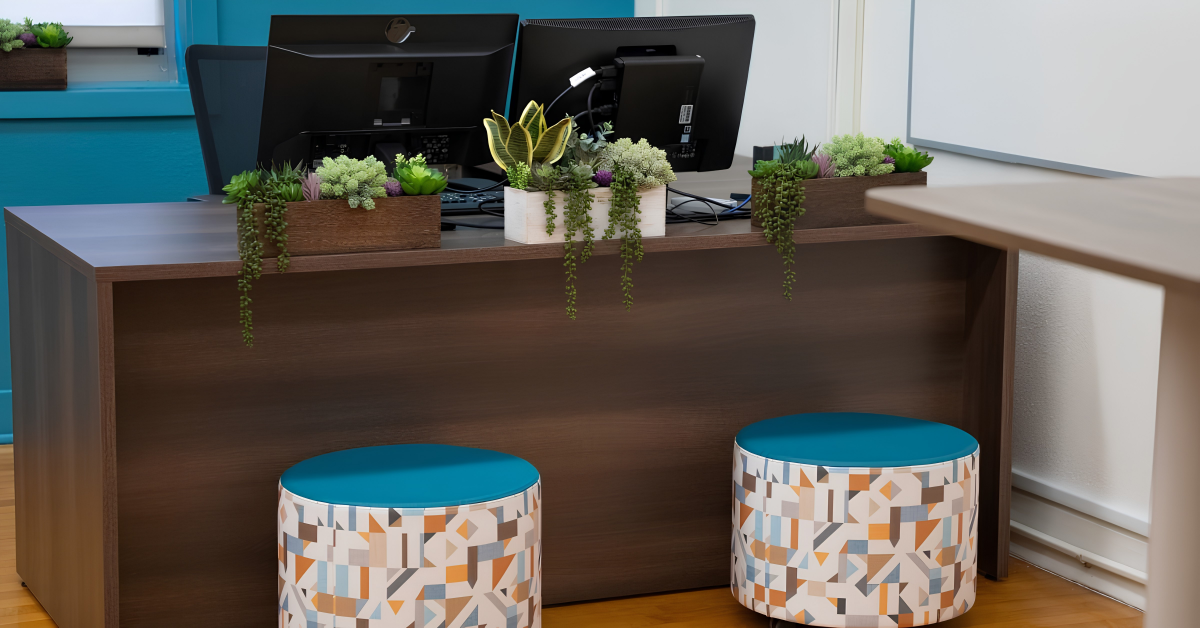
Adjustable seating allows teachers of different heights and body types to work comfortably. Desks with appropriate surface height support both seated and standing work, which helps reduce fatigue. Monitor arms or risers keep screens at eye level and prevent neck strain during extended computer use. Ergonomic design is a foundation for sustained focus and energy.
Design for Focus and Reduced Distractions
Teachers need moments of deep concentration, especially when planning lessons or assessing student work. Noise, visual clutter, and constant interruptions can break focus and slow progress. Workspace design should actively minimize these distractions.
Sound-absorbing materials, such as acoustic panels or soft surfaces, reduce background noise in shared areas. Strategic placement of workstations away from high-traffic zones also supports concentration. Even small visual barriers, such as low screens or shelving, define personal space without isolating teachers.
Balance Privacy and Collaboration
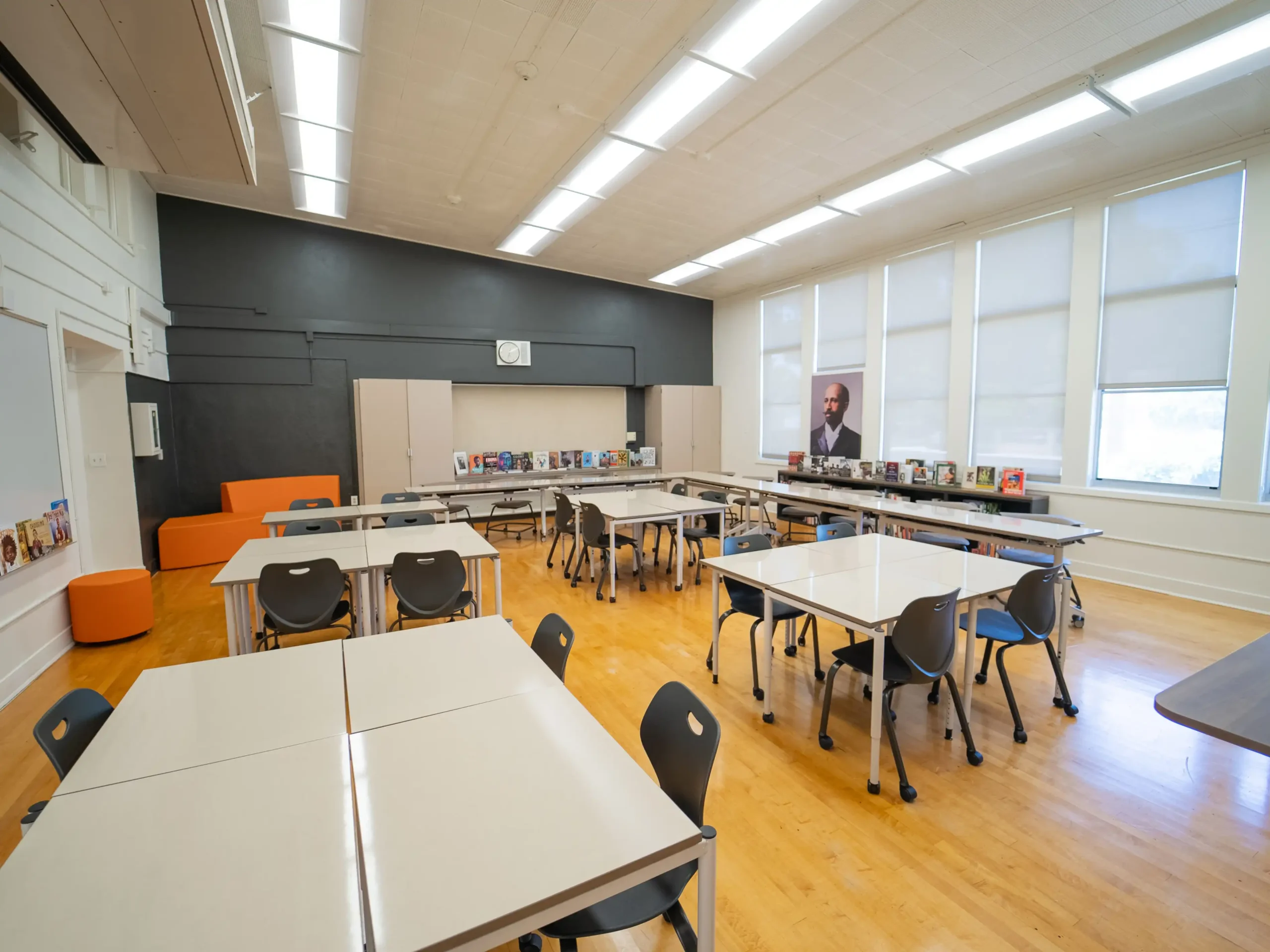
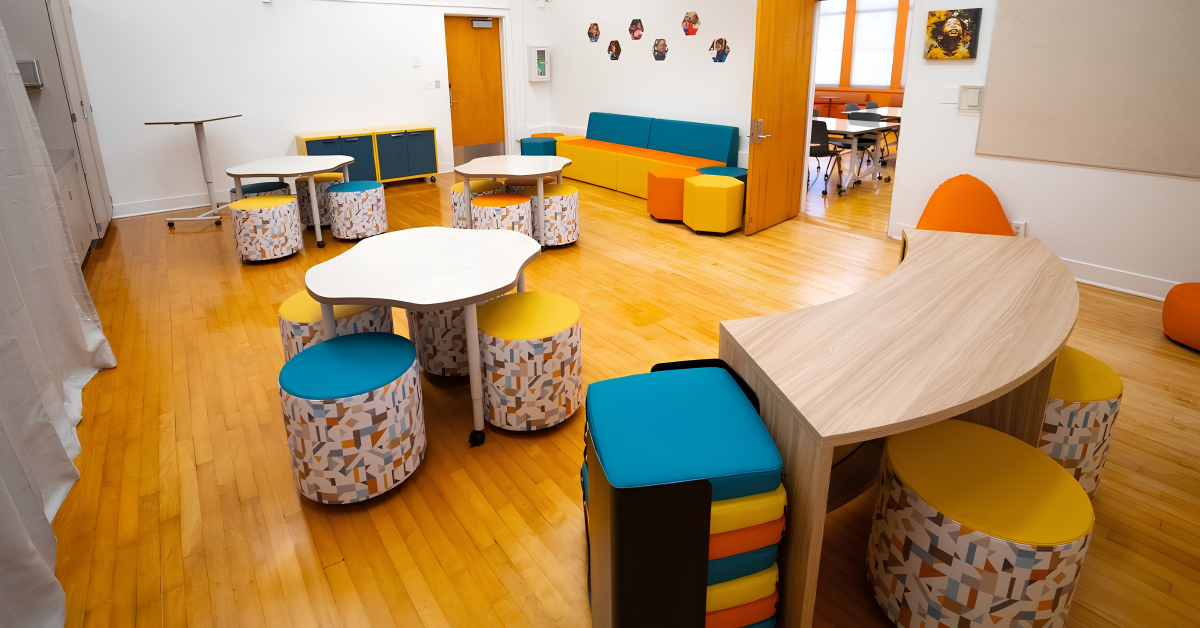
Thoughtful furniture selection can help schools create spaces that move easily between focus, storage, technology, and collaboration.
Support Organization and Storage Needs
Clutter slows productivity. Teachers manage a wide range of materials, from lesson plans and textbooks to technology and personal items. Workspaces should include ample storage to keep essential items within reach while maintaining a clean environment.
Built-in storage solutions work well in classrooms because they maximize space without adding visual noise. Clear organization systems help educators locate materials quickly and maintain order throughout busy weeks. This way, they spend less time searching for items and more time teaching.
Integrate Technology Thoughtfully
Technology drives modern education, but poor integration creates frustration. Teacher workspaces should support seamless use of digital tools without overwhelming the environment.
Power access should feel intuitive, with outlets and charging stations placed where teachers actually work. Cable management systems keep cords out of sight and prevent tangled work surfaces. Furniture that accommodates laptops, tablets, and monitors ensures that technology enhances productivity rather than complicating it.
Schools can collaborate with an education furniture dealer to gain access to solutions designed for technology needs, making integration smoother and more future-ready.
Use Lighting to Enhance Energy and Focus
Lighting has a powerful impact on mood, alertness, and productivity. Teacher workspaces benefit from layered lighting that adapts to different tasks throughout the day.
Natural light supports focus and well-being whenever possible. Task lighting provides targeted illumination for grading or detailed work, while ambient lighting creates a comfortable overall environment. Avoid harsh overhead lighting that causes glare or eye strain.
Choose Durable Materials and Calm Colors
Teachers interact with their workspaces constantly, so materials matter. Durable surfaces withstand daily use, while calm colors and textures create a sense of stability.
Neutral palettes with subtle accents work well because they reduce visual fatigue. Materials should feel solid and reliable, reinforcing a sense of professionalism and care. Intentional, well-maintained workspaces make teachers feel more valued, which improves motivation and productivity.
Design Flexible Spaces That Can Evolve
Educational needs change over time, and teacher workspaces should adapt easily. Flexible furniture systems allow schools to reconfigure layouts without major renovations.
Mobile desks, modular storage, and reconfigurable seating support evolving teaching models and staffing changes. This flexibility encourages productivity even as demands shift. Plus, designing with adaptability in mind supports future growth.
Align Workspace Design With School Culture
Teacher productivity does not exist in isolation from school culture. Workspace design should reflect values such as collaboration, respect, and well-being. Design choices that align with these values support teachers.
Spaces that encourage connection without sacrificing focus send a clear message that educators’ time and expertise matter. This alignment strengthens morale, reduces burnout, and supports long-term retention.
Plan With Intent, Not Assumptions
Every school operates differently, and effective design avoids one-size-fits-all solutions. Planning should involve input from teachers who will use the space daily. Their insights reveal pain points and opportunities that administrators may overlook.
Intentional planning ensures that design decisions solve real problems. Schools should invest time upfront to avoid costly adjustments and create spaces that genuinely support productivity.
Bringing It All Together
Thoughtful design transforms teacher workspaces into environments that support focus, efficiency, and well-being. Schools must consider ergonomics, flexibility, technology, and culture to design teacher workspaces with productivity in mind. A holistic approach empowers teachers to work smarter, feel better, and focus more on their students.
If your organization is planning new educational spaces or upgrading existing ones, partnering with a knowledgeable workplace design team can make all the difference. Reach out to bluespace interiors today to explore how intentional furniture selection and space planning can create teacher workspaces that support productivity and long-term success.
Ready to find your "blue space"?
Contact bluespace interiors today to schedule a consultation and transform your workplace!