The Gruen Effect: How the man who invented the American mall spent the rest of his life trying to take it back
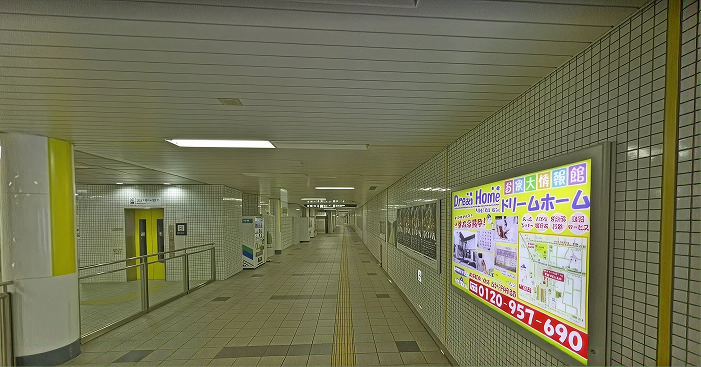
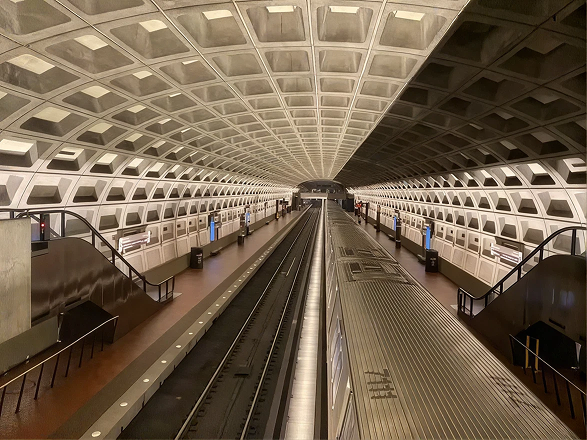
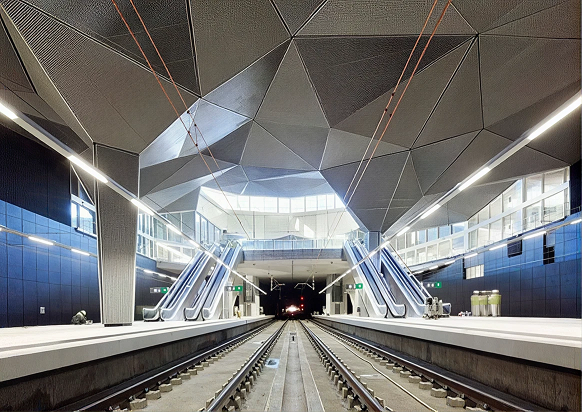
A train station is a simple idea. It moves people from one place to another. The design serves that function and nothing else; the platforms, the signage, the benches bolted to the floor at intervals, all of it organized around the premise that someone is arriving or leaving. The architecture has a job, and when the job is being done, you do not think about the building at all.
Stand in that same station at two in the morning with no one else on the platform, and something changes.
The building has not changed. The ceiling height is the same. The fluorescent light is the same. The benches are where they were. But the absence of the people the space was built for has done something to the atmosphere that is difficult to name and almost impossible to argue yourself out of. The station feels wrong in a way that is not exactly about danger or darkness, but about the space having lost the thing that made it make sense.
Sigmund Freud wrote about this feeling in 1919. He called it the uncanny, and he was careful to separate it from ordinary fear, from the fear of the unknown or the unfamiliar. The uncanny is the opposite. It’s the fear of the familiar seen at the wrong angle. The German word he used was unheimlich, which literally translates as “unhomely”, the feeling produced not by something alien, but by something domestic that has slipped just slightly out of register.
The train station at night is unhomely in exactly that sense. You know what it is. You have been to hundreds of them. Your body knows the spatial grammar of the place. And because you know it so well, the wrongness of finding it empty reads as a violation rather than just an absence. The space is still fluent in a language, and there is no one left to speak it to.
bluespace interiors designs rooms that hold their sense of self even when empty.
This is what the study of liminal spaces is actually about. The word liminal comes from the Latin limen, meaning threshold. It describes the condition of being between states, between departure and arrival, between what a space was designed for and what it becomes when that purpose is removed. Liminality unsettles us because we are pattern-seeking animals, and transition is, by definition, the moment when the pattern has not yet resolved.
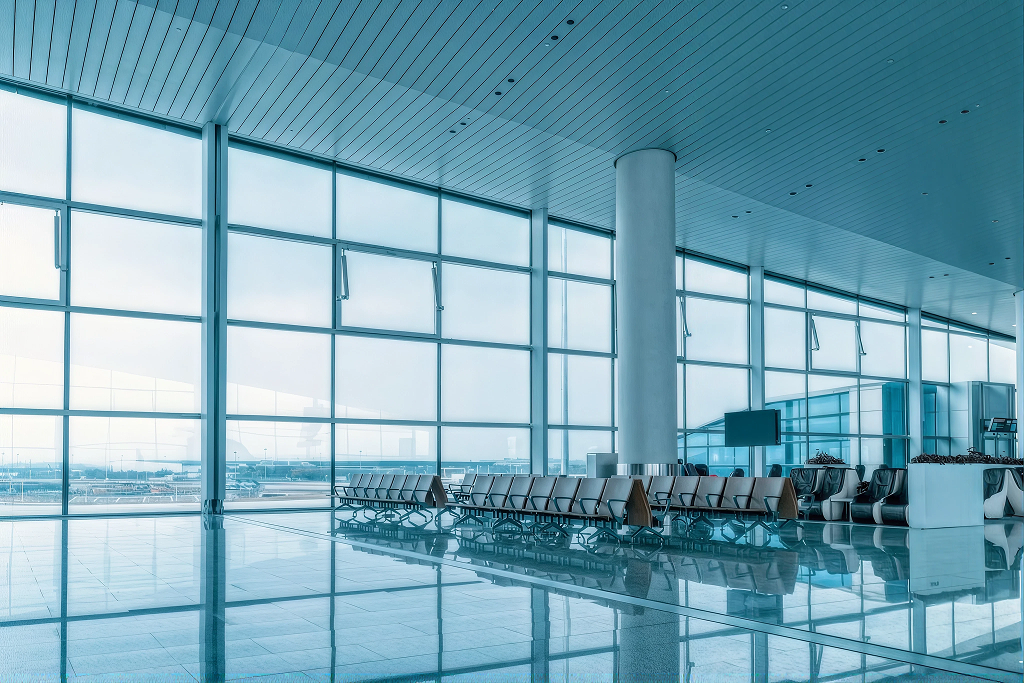
The spaces that produce this feeling most reliably are the ones designed to be invisible. The airport terminal. The hospital corridor. The office floor after everyone has gone home. The parking structure on a Sunday. These are spaces built entirely around function, with no ambient interest, no material warmth, no reason to linger. When the function is operating, you move through them without registering them. When the function stops, you are left alone with the architecture, and the architecture was never designed to be looked at.
It doesn’t have to be this way. A space that’s designed around presence, not just throughput, doesn’t lose itself the moment the crowd does. That’s the premise bluespace interiors builds from: rooms with enough material warmth and intention that they still feel like somewhere, whether they’re full or empty.
That is where the dread comes from. A space built to disappear into its own purpose becomes strange the moment the purpose disappears. The structure remains. The reason for the structure does not. And what is left is a room that knows what it was for and cannot do it anymore, holding that knowledge in every fixture and every surface, waiting.