The Impact of Furniture Layout on Employee Productivity
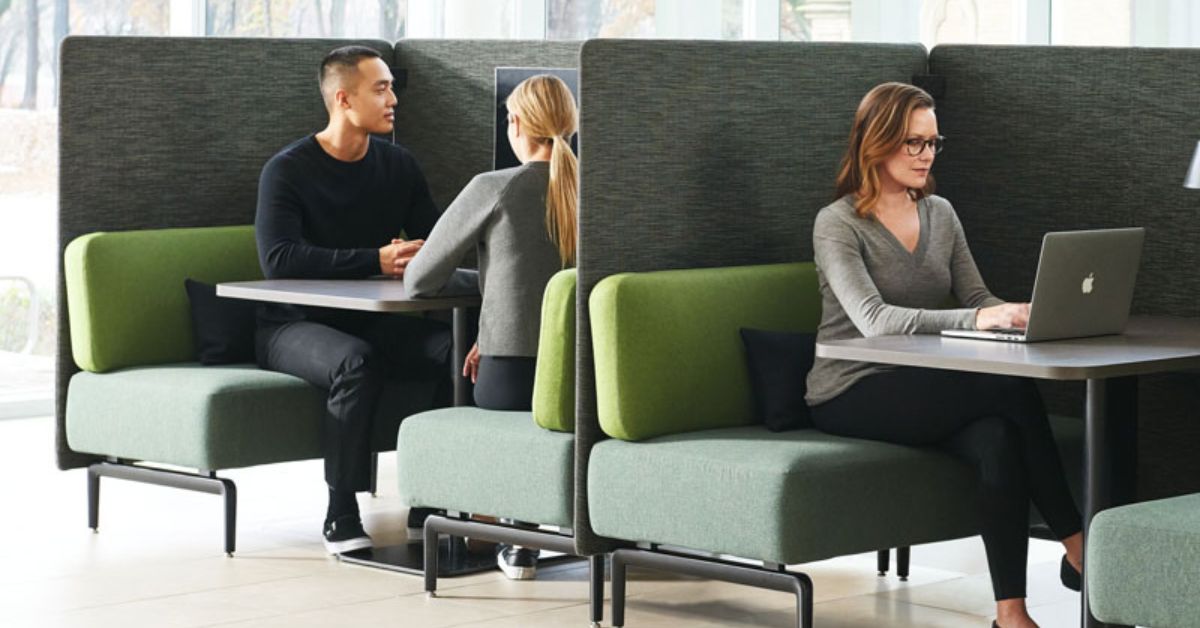
Companies are constantly looking for ways to enhance productivity, but one overlooked factor is the workspace itself. The impact of furniture layout on employee productivity can be significant, affecting how employees interact and collaborate. Workspace layout can also impact employees’ overall job satisfaction and efficiency. Explore how strategic furniture arrangements can make a noticeable difference in workplace productivity.
Open Floor Plans vs. Private Offices
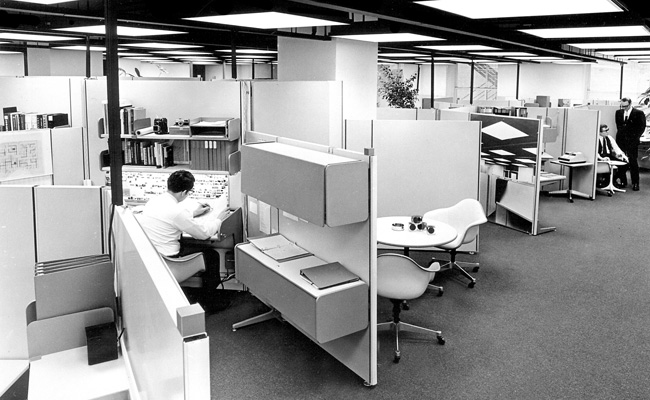
An open floor plan promotes collaboration and communication among employees. It removes physical barriers, making it easier for team members to interact and share ideas. However, this layout can sometimes result in distractions, reducing productivity.
On the other hand, private offices offer quiet spaces for focused work but may limit spontaneous interaction and idea sharing. Offering both open and private spaces optimizes the impact of furniture layout on employee productivity.
The Role of Ergonomics in Productivity
Ergonomically designed furniture is crucial for maintaining employee health and productivity. Chairs that provide adequate support and desks that can be adjusted to the correct height can prevent physical strain and discomfort.
When employees are comfortable, they are less likely to experience fatigue and more likely to maintain high productivity levels. This means that investing in ergonomic furniture is a key aspect of maintaining employee well-being and efficiency.
Technology Integration in Workspace Design
Integrating technology into the office layout is essential for supporting modern work practices. This includes providing plenty of power outlets, Wi-Fi access, and spaces for video conferencing. A well-integrated technological setup can streamline workflows and reduce the time spent on technical issues.
Lighting and Its Effect on Productivity
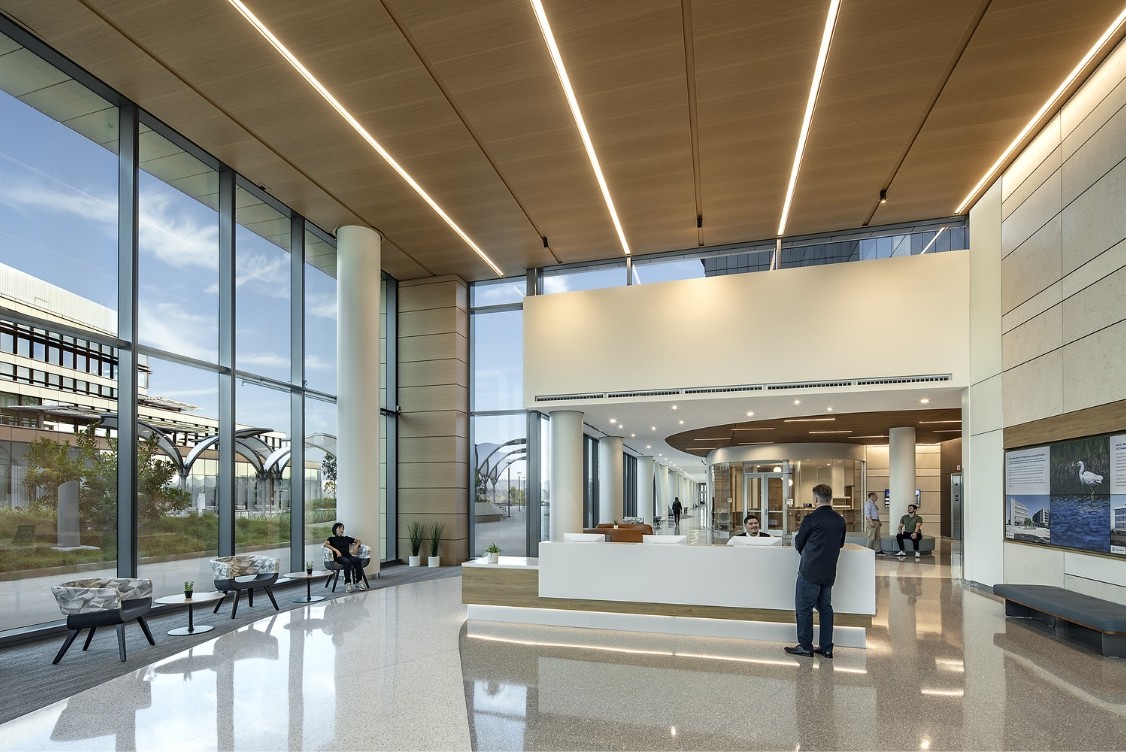
Implementing the right lighting solutions is an important part of maximizing employee productivity. Natural light can boost mood and energy levels, while poor lighting can lead to eye strain and fatigue. Ensuring the office layout maximizes the presence of natural light and providing adequate artificial lighting can significantly improve overall office productivity.
By understanding the impact of furniture layout on employee productivity, businesses can create environments that not only meet the needs of their employees but also drive efficiency and success.
As you begin to design your office, work with the team at bluespace interiors. We offer a wide selection of furniture, from ergonomic desks to modern office lounge seating, and we have the expertise to help you design a space that positively impacts your business.